Circular Design
for a Changing
World

Wanna hear a secret?

I’ve got this pair of boots I bought on a whim over fifteen years ago. I adore them — they’re versatile, simple, special, and insanely comfortable. The truth is, they represent me in a way I can’t quite put into words… when I wear them, I just feel more me.

That deep connection we sometimes feel with a product or service? It’s not random. I can assure you — someone thought of you (your specific user profile) when creating it… and nailed it.

After more than twenty years working in visual communication, I’ve experienced again and again how powerful the process can be when we design in a genuine and authentic way — to truly connect with people and stand out in a world full of noise, choice, and constant change.

To make it happen, I believe there are two key factors:

  1. In-depth research before jumping into creativity.
    The goal is to uncover people’s true motivations. Once you find them, that core becomes the point of connection — and it keeps resonating over time.
  2. A graphic solution that’s simple and spot on.
    When design communicates those real motivations in a clear and accurate way, it becomes a communication system that’s flexible, adaptable, and timeless.

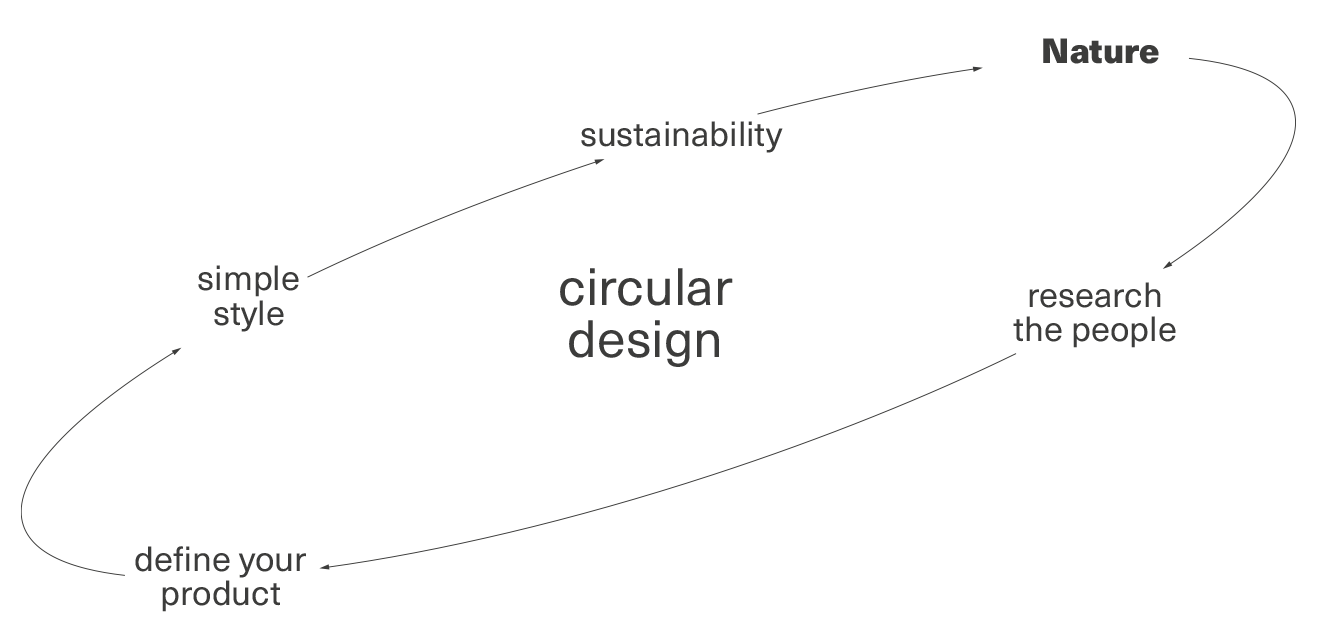
Since my approach is all about circular design —and the name isn’t just a coincidence— I’m adding two more ingredients to the mix:

  1. Nature as a source of inspiration.
    There are many places to draw inspiration from, but when your gaze turns to the origin, the solutions tend to be more authentic and universal.
  2. Circular economy and low-CO₂ models.
    These are emerging values, and it’s crucial to understand who is communicating them and how, in ways that are both honest and innovative.
    (If you’d like to stay on top of this, you can subscribe to my newsletter: El Circulómetro.)

This combination of factors —seasoned with a pinch of inspiration (which, by the way, only shows up when you’re working)— leads to simple yet powerful design solutions, able to adapt precisely and consistently to people’s real needs…

…Just like those boots that always make you feel right.
Design
Thinking

Have you heard of Design Thinking?
If your answer is “Yes, but I can’t really explain it,” or simply “No,” I invite you to discover it — because, trust me, it’s worth it.

It’s a method where people take center stage.

Talking to and observing users helps us understand the deeper layers — what they need, what frustrates them, and what could make their lives easier.  With that valuable insight, creativity kicks into high gear, generating ideas that may seem wild at first but can push innovation further.  Then comes the time to get grounded: we test those ideas again with real people, discard what doesn’t work, and narrow down to solutions that are truly effective, innovative, and impactful.

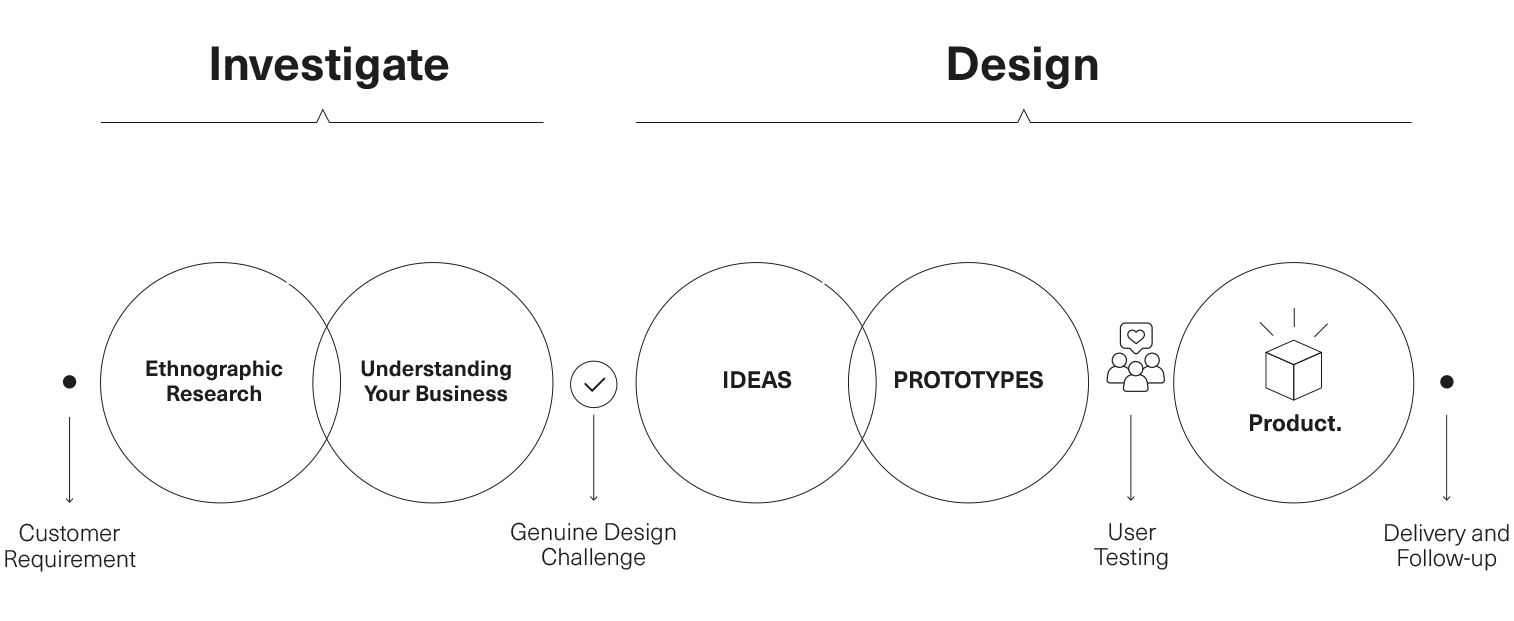
This diagram shows how I apply this methodology in my work.

The 5 Steps

It’s simple. It’s logical.
Good design always follows this path. Depending on the project, it might take three days or three months, but the process stays the same.

Here are the five key stages you’ll always need to go through:

1. ETHNOGRAPHIC RESEARCH

Are you shooting at everything that moves, or are you clearly targeting the right audience?

At first glance, reality can seem generic and full of stereotypes. Without research and real-world insights, your project will end up being just another one in the crowd — and if it connects with people, it’ll be pure luck.

That’s why research is the real game-changer. It’s the foundation of design that truly hits the mark and drives innovation.

Tools: sector-specific market and consumer data, surveys, field observation, interviews, triads, empathy maps, and user archetypes.

2. UNDERSTAND YOUR BUSINESS

Designing without a deep understanding of your business and its context will only lead to mediocrity.

That’s why it’s time to look inward — refine your value proposition and understand how you’re positioned in the market. It all starts with two simple questions:

What makes you unique?
And how do you want to be perceived in relation to others?

This strategic clarity will help you find your place on the map — and make you feel like you’re holding a diamond in your hands.

Tools: Business Model Canvas, The Brand Key, Benchmarking, and Positioning Map.

3. IDEATE

Now it’s time to have some serious fun!

The strategic decisions drawn from the research set the framework for action — and that clarity gives us the confidence to go all-in with bold, disruptive, and innovative ideas.

Welcome to the brainstorm! Don’t hold back — everything’s allowed here… until reality says otherwise.

4. PROTOTYPE & TEST

If something’s not working, now is the time to find out.

This is where our ideas take shape — as a piece of packaging, a website, a brand… whatever the format, we need to quickly and realistically check that everything’s aligned and working like a charm.

We test with users, gather feedback, and refine the solutions.

5. FINAL PRODUCT

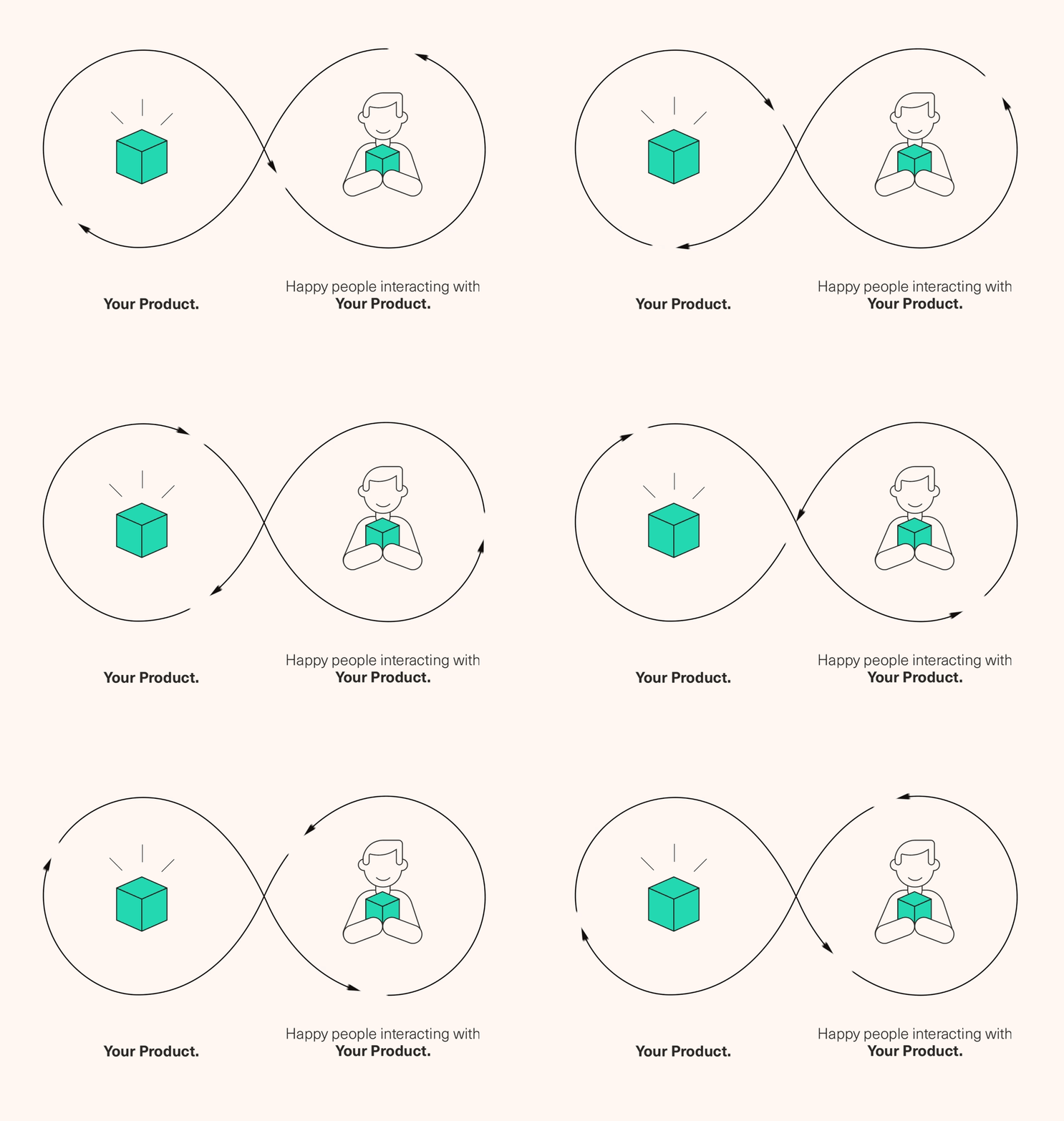
There’s nothing more satisfying than seeing people happily engaging with your product.
A design grounded in research creates real impact — and adapts to change. That’s why your product will be chosen, and over time, it will build trust and loyalty.

And the best part? If your proposal is circular, its success will go far beyond financial results — bringing social and environmental value to the table.

Circular design understands its environment, sees through the eyes of the user, solves with simplicity, and evolves by adapting to change — and to people.

Subscribe to the free El Circulómetro NEWSLETTER.
Circular Brands vs. Greenwashing.
+Bonus gift:  Mini Guide to Circular Communication  (No Additives)